
When a part has openings on different faces, reaching them all takes some thought. The cutter needs a clear approach, and the workpiece still has to stay firmly in place.
Five-axis machining gives the machinist more angles to work from. For some parts, that means less time spent taking the workpiece out and setting it up again.
More angles, fewer setups
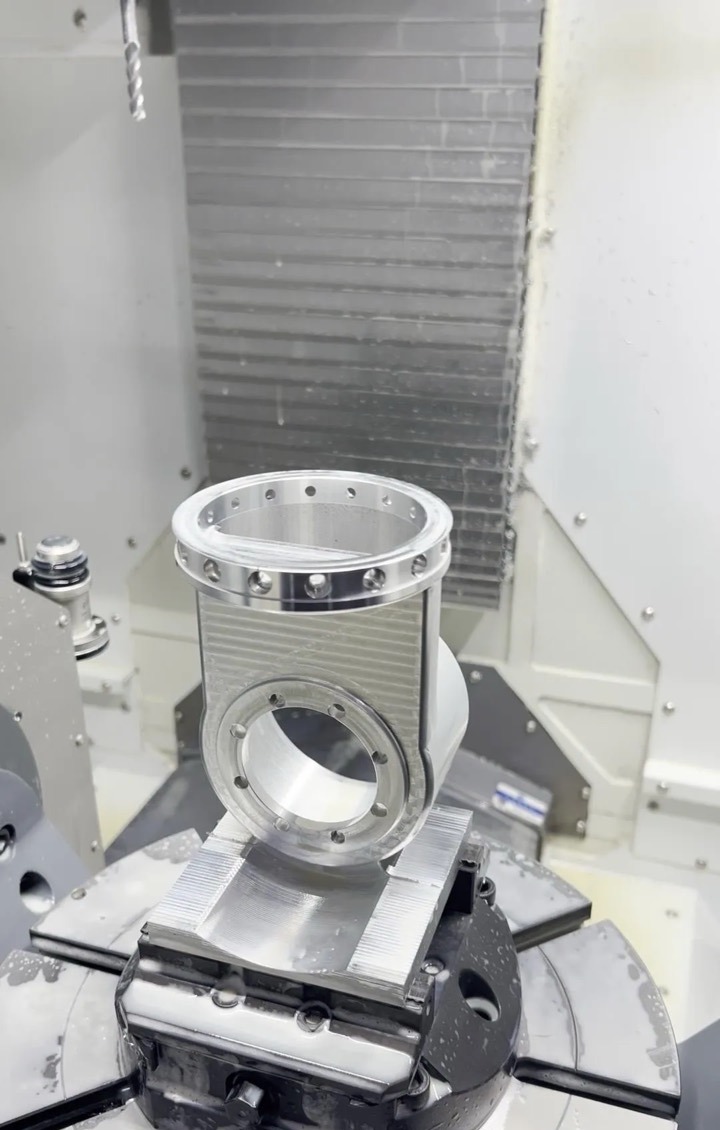
Look at the top and side openings in this part. Features facing different directions are a good reason to consider a machine that can tilt and rotate the workpiece.
Changing the angle may bring another face within reach while the part stays clamped. Whether that works for the whole job depends on the geometry and how the part is held. Some operations will still need another setup.
3+2 or simultaneous five-axis?
Both use five-axis capability, but in different ways.
With 3+2 machining, the machine turns to an angle, holds that position and makes the cut. It can then turn to another angle for the next feature.
With simultaneous five-axis machining, the angle can change during the cut as the tool follows the surface.
If a fixed angle gives the cutter the access it needs, 3+2 may be enough.
The finish is only part of the story
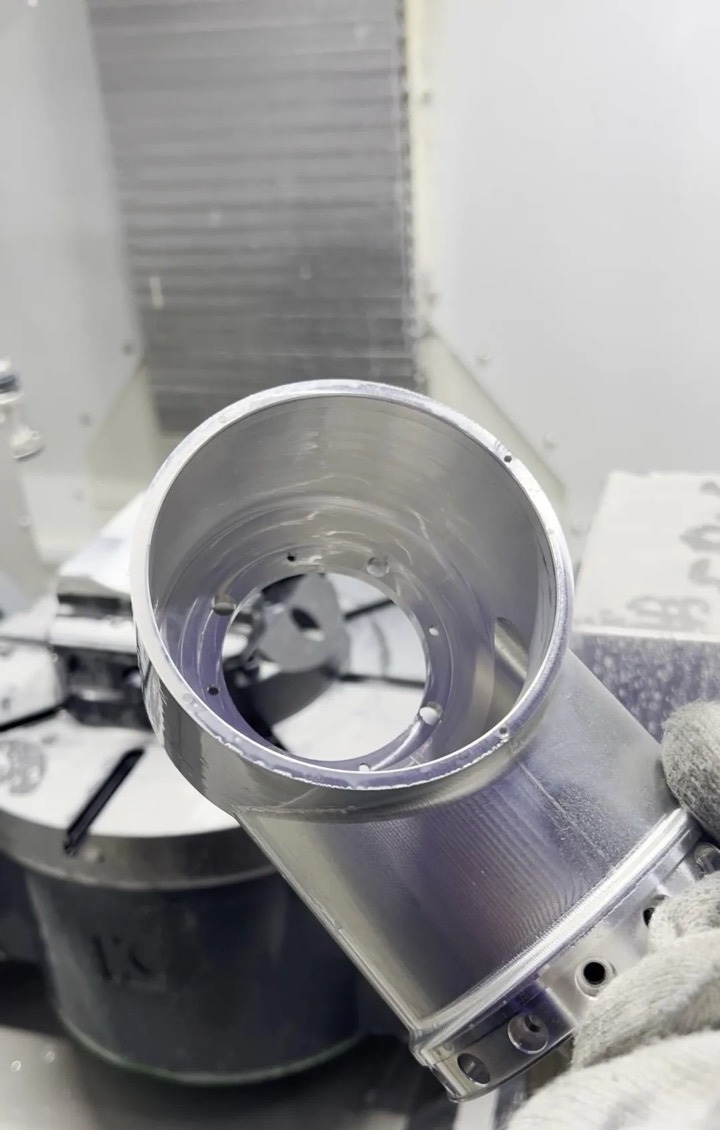
The inside view gives a closer look at the bore, shoulder and surrounding holes. It shows the shape and surface appearance; checking the dimensions is a separate job.
Tool choice, workholding, programming and machine condition all affect the result. Before ordering, agree which features need to be measured and what inspection records you expect to receive.
Four questions worth asking
- Which features need to fit or line up? Mark the important dimensions and tolerances on the drawing.
- Can the cutter reach them? Ask the manufacturer to flag any difficult areas.
- What is included in the price? Check material, finishing and inspection.
- What comes with the parts? Agree the reports and other documents you need.
A clear drawing and a few specific questions give the manufacturer something useful to work with.
Have a drawing to review?
Molitech supplies build-to-print machined parts through partner manufacturers. We bring drawing questions and inspection requirements together before the order, so you know what the quotation covers.
Send us the drawing, material, quantity and required date.
Leave a few details and we will contact you by email.